



Get your AC ready before the Charleston heat hits
Charleston springs are unpredictable — cold and gray one day, hot and sticky the next. Then, almost overnight, it’s full-on summer and your AC is running nonstop. The worst time to find out your system has a problem is the first 90° afternoon, when every HVAC company in town is booked solid.

A little prep now saves you from that. Most of this checklist takes under an hour and costs nothing, and it’ll help your system run cooler, cheaper, and more reliably all season. Here’s exactly what to do, and the one part worth leaving to a technician.
What you can do yourself
1. Clear out the outdoor unit
Over fall and winter, your outdoor condenser collects leaves, grass clippings, pollen, and whatever blew in during the last storm. That debris chokes airflow and makes the unit work harder.

Cut back any weeds, shrubs, or branches so there’s at least two feet of clear space on all sides. Gently clear leaves and debris off the fins — don’t jam anything between them, they bend easily. While you’re there, make sure the unit sits level and that the wires and refrigerant lines running into it look intact, with nothing chewed, crushed, or disconnected.
2. Replace your air filter
A fresh filter is the single cheapest thing you can do for your system. A clogged one chokes airflow, drives up your power bill, and strains the blower. Swap it before the cooling season ramps up, then keep an eye on it — in Charleston’s pollen and humidity, filters load up fast. (More on timing in our guide to how often to change your air filter.)

3. Check your vents and returns
Walk the house and make sure supply vents are open and not blocked by furniture, rugs, or curtains. Vacuum dust off the vent covers and around the return grille, where pet hair and dust collect over winter. Blocked or dirty vents make your system work harder to move air and can leave some rooms stuffy while others stay comfortable.
4. Test it before you need it
Don’t wait for the first heat wave to find out something’s wrong. On a mild day, switch the thermostat to cool and set it a few degrees below room temperature. You should feel cold air at the vents within a few minutes, with no strange smells, rattles, or grinding. If it takes a long time to cool, blows warm, or makes new noises, make a note — that’s worth a technician’s look before the season hits.
5. Give your thermostat some attention
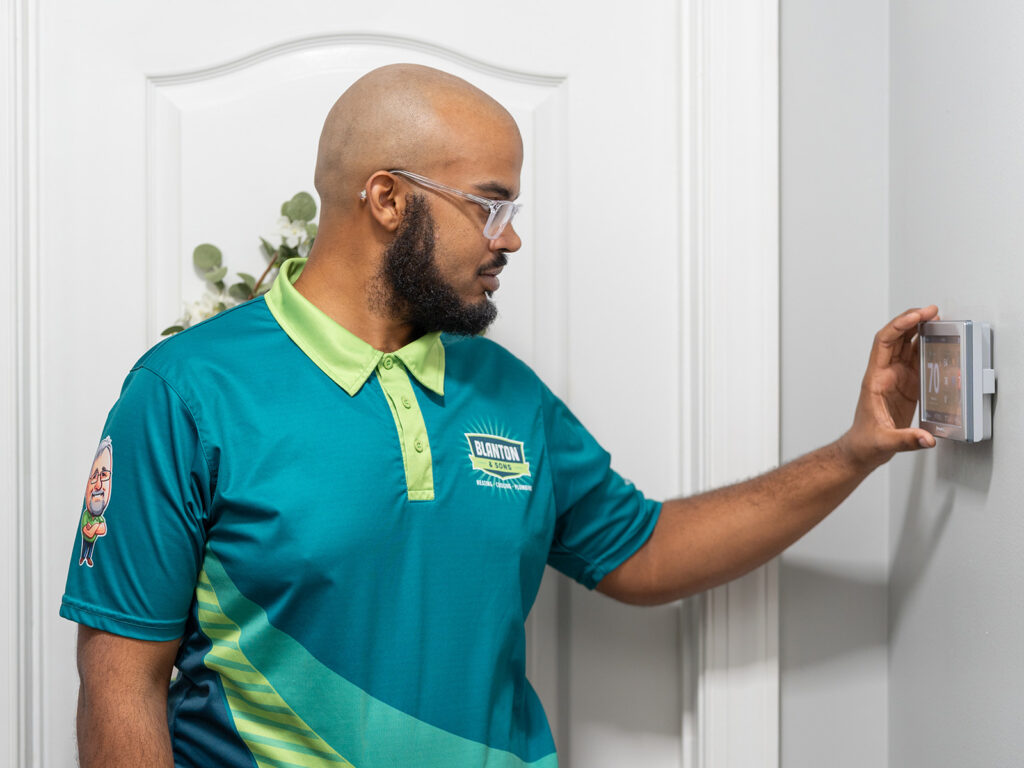
Replace the batteries if it uses them, and confirm it’s holding the temperature you set. If you’re still running a basic dial or manual thermostat, spring is a good time to consider a programmable or smart model — it can learn your schedule and trim your bills by automating temperature setbacks while you’re away. We can help you pick and install one through our indoor air quality and thermostat services.
Leave this one to a technician: the refrigerant and tune-up
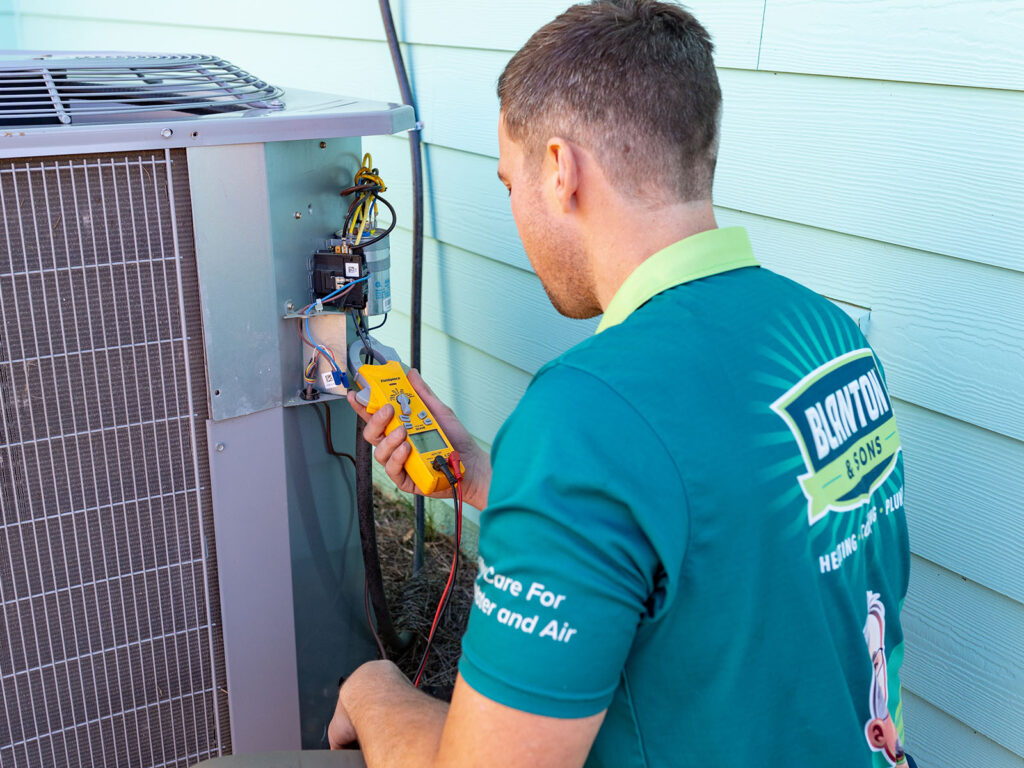
Most spring prep is DIY-friendly, but refrigerant is not. If your system is low, it almost always means there’s a leak — and simply “topping it off” every year just pays to leak the same refrigerant into the air again and again. A technician can find and fix the leak, which saves you money and protects the compressor, the most expensive part of your system.
A professional spring tune-up goes beyond what you can do from the driveway: checking refrigerant charge, testing electrical components and capacitors, clearing the condensate drain (a big deal in our humidity), measuring airflow, and catching small problems before they become July breakdowns. If it’s been more than a year, book a spring AC tune-up before the rush.
This matters more on older systems. The harder an aging unit works to keep up, the more energy it burns — and at some point, repairs stop making sense. If yours is struggling, a technician can give you a straight answer on whether it’s worth fixing or time to plan a replacement.
Your quick spring AC checklist
- Clear two feet of space around the outdoor unit and brush off debris.
- Replace the air filter.
- Open and dust vents; vacuum around the return grille.
- Test the system on a mild day and listen for trouble.
- Check the thermostat batteries and settings.
- Schedule a professional tune-up and refrigerant check.
Beat the rush
The homeowners who sail through a Charleston summer are the ones who get ahead of it. Run through this list now, and if anything seems off — or you’d just rather have a pro make sure you’re ready — call Blanton & Sons at (843) 256-6454 or request a quote. You can also ask about our maintenance plan, which includes seasonal tune-ups so your system is checked and ready every spring and fall without you having to think about it.
Reviewed by the team at Blanton & Sons — a family-owned HVAC, heating, and plumbing company serving Charleston and the Tri-County area since 1998.